 Family and Inheritance Law
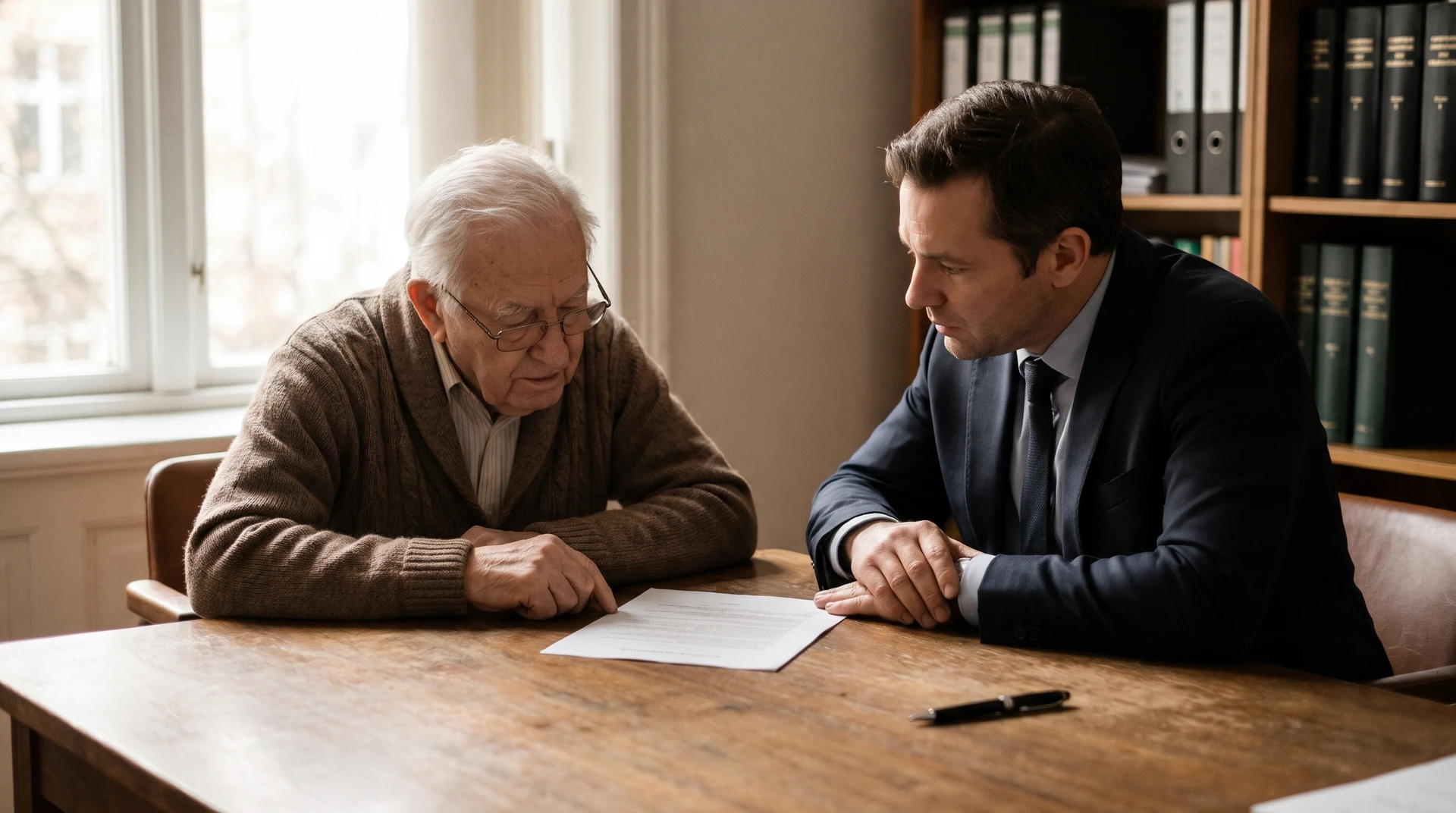
Depositing a will with the Registrar of Inheritance Affairs is an optional procedure intended to safeguard the original will and make it easier to locate in the future. This guide explains who may make the deposit, how to do it remotely, what happens after the deposit and which mistakes are worth avoiding.
Depositing a will is an optional procedure in which the testator submits the original will for safekeeping with the Registrar of Inheritance Affairs, to ensure that it is not lost, forged or concealed. The will is valid even without being deposited, but depositing it provides official documentation, secure physical safekeeping and easy location by the heirs after death.
What depositing a will is and why it is needed
When we talk about depositing a will, we mean one simple technical act: handing over the original will, in the testator's own handwriting or as it was signed before them and before witnesses, to the Registrar of Inheritance Affairs at the Ministry of Justice for physical safekeeping. It is not a review of the will's content, not a confirmation of its legal validity, and not an examination of the testator's capacity at the time it was made. The Registrar simply receives the document, records it in the database and gives the testator a confirmation of the deposit.
The Succession Law recognizes several forms of will: a handwritten will, a will before witnesses, a will made before an authority (such as a judge, registrar or notary), and a deathbed will made orally in special circumstances. Each of these forms, except the oral will, which has no physical original document, can in principle be deposited with the Registrar, provided it meets the formal requirements the law sets for that specific will.
The practical reasons people choose to deposit their will are clear. A document kept at home, in a drawer or a private safe, can be lost in a fire, a flood or by mistake, or can even deliberately "disappear" at the hands of someone unhappy with its content. Depositing prevents such scenarios, and also provides important evidence against future claims that the will was changed or replaced after it was made. Another advantage is ease of location: after death, whoever files an application for a probate order does not need to guess whether a deposited will exists, because the Registrar checks its records automatically.
Is depositing a will mandatory or optional
Under Succession Law, 5725-1965, depositing a will is an option the law grants the testator, not an obligation. A will made in accordance with the formal requirements set by law, whether handwritten, before witnesses, before an authority or in another form recognized by law, is equally valid regardless of whether it was ever deposited. Depositing does not create validity, and the absence of a deposit does not impair it.
What happens to a will that was not deposited
The practical problem with a will that was not deposited and is unknown to the family is that it may simply never be found. If the testator kept the document in a place only they knew about, and told no one it existed, the will may stay in that same drawer long after death, while the estate is in practice distributed according to law or according to an earlier will that was found. Even if the will is eventually discovered, late discovery can lead to a dispute between heirs, especially if actions have already been taken in the estate based on a different assumption.
Imagine a situation like this: a person writes a will by hand and places it between the pages of a book on a shelf at home, without telling their family. Years later, around the time of their death, the heirs assume there is no will and file an application for an inheritance order under the ordinary rules of succession. Only when the apartment is cleared for sale is the will discovered. In such a situation, a separate legal proceeding may be needed to correct the distribution of the estate in line with the wishes expressed in the will, a proceeding that could have been avoided relatively easily had the will been deposited, or had the family known its location in advance.
The choice between depositing a will and keeping it yourself is therefore a question of risk management, not of legal validity. Someone who trusts that the family will know where to find the will and handle it properly may choose not to deposit it. Someone who wants maximum protection against loss, forgery or non-discovery will benefit from depositing it.
Who may deposit the will and when
The basic rule here is a point that confuses quite a few people: the will is deposited by the testator, personally. The Registrar of Inheritance Affairs does not accept a deposit request from a legal representative, attorney-in-fact, family member or caregiver, even if they hold a general or notarial power of attorney. The requirement that the testator appear in person is intended to ensure that it is truly the testator who is acting to deposit the document, and that this is not an act by a third party on their behalf.
This principle is directly connected to the personal nature of making a will under Israeli law: making a will is a legal act that cannot be delegated to anyone else, not even to a guardian appointed for a person under the Legal Capacity and Guardianship Law, 5722-1962. A guardian may act on behalf of the ward in matters of property and health, but cannot make a will or deposit a will on the ward's behalf, because the decision on the will's content and on its very existence must come solely from the testator's own free and personal will.
In practice: if an elderly or ill parent wants to deposit a will, the children cannot "do it for them". If the testator's health makes it difficult for them to appear in person, it is worth checking in advance with the Registrar's office or with a lawyer which accommodations are possible, rather than relying on someone else being able to complete the deposit on their behalf.
Deposit of a notarial will and a digital notarial will by a notary
There is one exception to this rule: a notary may, at the testator's request, personally deposit a notarial will or a digital notarial will that they drew up, within a fixed period from the date the will was made, as set by the regulations. In such a case, it is the notary who actually carries out the deposit, by virtue of an authority the law recognizes in the context of the specific notarial will they drew up, and not by virtue of a general power of attorney.
A digital notarial will is drawn up and signed by electronic means, usually in a video meeting with the notary, instead of a physical signature on paper. As regards deposit, a notary who draws up such a will has the same exceptional status as a notary who draws up a "regular" notarial will: they may deposit it personally within the fixed period, even if the testator did not appear in person at the Registrar's office.
The length of this fixed period is set in the regulations and may be updated, so it is advisable to check the exact deadline with the Registrar of Inheritance Affairs or with the notary who drew up the will, rather than assuming it stays the same over time.
Where to deposit a will
The deposit is made at the office of the The Registrar of Inheritance Affairs assigned to the district of the testator's place of residence. In Israel there are several Registrar service districts, and the relevant office is determined by the testator's registered home address, not by whichever office is geographically convenient.
Anyone unsure which district they belong to, or anyone living abroad who is considering coming to Israel specifically to make the deposit, should check this in advance, so as not to arrive at the wrong office and find out they need to go elsewhere. Confirming the correct address early saves an unnecessary trip and an avoidable delay in the process.
The practical process: the stages of depositing a will from start to finish
Below are the practical steps, for both in-person and remote deposit, so that it is easy to understand exactly what awaits anyone starting the process.
In-person deposit at the Registrar's office
- Booking an appointment in advance at the office of the Registrar of Inheritance Affairs assigned to the district of the testator's place of residence
- The testator attends the office in person, with the original will and a valid identity card
- Completing a deposit application form before a Registrar clerk
- Paying the one-time fee set in the regulations
- Handing over the original will for safekeeping by the Registrar
- Receiving a deposit confirmation or certificate bearing a file number
Filing the online application
Following changes to the procedures of the Registrar of Inheritance Affairs, it is now also possible to file an application to deposit a will from home, through the Registrar's online system, without appearing in person at the office at the initial stage.
- Logging in to the online system of the Registrar of Inheritance Affairs and identifying yourself using the means of identification the system requires
- Completing the application form online
- Paying the fee as part of the online process itself
- Receiving a confirmation or reference number for the application
Delivering the original will after the online deposit
It is important to understand that the online deposit is only an initial stage, not the completion of the procedure. The testator must still deliver the original will to the Registrar, personally or through another person (for example a courier, or by depositing it in a service safe), within a fixed period set by the Registrar from the time the online application is filed. If the original does not arrive on time, the online deposit may be cancelled and the process will have to start over.
For this reason, before relying on the online procedure, it is worth confirming the exact timetable directly with the Registrar's office, so as not to miss the deadline for delivering the original. For those living abroad, the online procedure can be a very convenient solution, but it is advisable to coordinate it in advance with a lawyer, to make sure every stage is carried out as required and that the original is physically delivered on time.
What documents and costs depositing a will requires
To deposit a will, the testator usually needs to bring:
- The original will, signed as it was made (by hand, before witnesses or in another form under the law)
- A valid identity card
- A deposit application form, as required by the Registrar
A one-time fee applies to the deposit, in a nominal amount set in the regulations. Since fee amounts may be updated from time to time, it is advisable to check the current amount directly with the Registrar of Inheritance Affairs, or to ask a lawyer when arranging the deposit. To be clear: this payment is for the safekeeping service only and has nothing to do with a lawyer's fees, where the client uses a lawyer to draft the will or for guidance through the process.
A point that surprises quite a few people: unlike making the will itself, where witnesses are required under the law, no additional witnesses are needed at the deposit stage itself. The only presence required is that of the testator (or the notary, in the exceptional case described above).
Another point worth knowing: at the deposit stage, the Registrar does not check whether the will was duly signed by two witnesses, as required for a will before witnesses, and does not check the witnesses' details or identity. This means that a will that was not properly signed can in practice be deposited without the Registrar flagging it. The problem will only come to light after death, when the application for a probate order is examined, and it may then turn out that the will is invalid as to its form. For this reason, a legal review of how the will is signed, already at the drafting stage and before deposit, is just as important as the deposit itself.
What happens after deposit: confidentiality, changes and revocation
One of the most important features of depositing a will is the confidentiality it enjoys during the testator's lifetime.
Who can view the deposited will
As long as the testator is alive, the deposited will is fully confidential. No one, including a spouse, children or other heirs, can view its content without the testator's express consent. This is true even of the closest family member. This confidentiality is exactly what allows the testator to change their mind at any time, without anyone knowing in advance.
What the testator actually receives is a deposit confirmation or certificate bearing a file number. This is an important document worth keeping in a safe place, and it is also advisable to tell someone the testator trusts that it exists (not necessarily what the will says), so that they know there is a deposited will and how to locate it when the time comes. A common, practical way to do this is to give the file number and the name of the lawyer who drew up the will to a family member, or to place the confirmation in a sealed envelope marked "to be opened only after death", so that the technical information about the deposit itself is accessible without revealing the actual content of the will.
How to revoke or replace a deposited will
The testator may at any time, as long as they have the capacity to do so, revoke a deposited will, withdraw it from the Registrar, or deposit an updated will in its place. This is not a one-way act: a person can change their wishes many times over their lifetime, and depositing does not "lock" them into the first will they deposited.
The critical point here is that if a new will is made, it is important to act in an orderly and explicit way so that the old deposited will does not remain in force, and so that no dispute arises in the future between heirs over which of the two wills governs. For example, if a person deposited a will in a certain year, then remarried and deposited another will without stating explicitly that it revokes the previous will, two deposited wills may come to light side by side after their death. In such a situation, the heirs under the earlier will and the heirs under the later will may dispute which of them reflects the testator's last wishes, which may require a judicial decision. Imprecise wording, or leaving two deposited wills without a clear statement of which revokes which, is a situation that may lead to Objection to a will between heirs after death. For any change, revocation or withdrawal of a deposited will, it is advisable to use a lawyer, so that the revocation is precise, explicit and legally valid.
How to check the status of an application and locate an existing deposit with the Inheritance Registrar
Anyone who has filed an application to deposit a will can check the status of their application using the confirmation number or file number they received at the time of filing. This is a simple technical check that relates to the deposit process itself.
It is important to distinguish this from checking the status of an application for a probate order, which is an entirely separate process, relevant only after the testator's death, once an application for a probate order has been filed.
A frequently asked question: can you "check whether a deposited will exists" for a particular person? The practical answer is that as long as that person is alive, there is no such option, precisely because of the confidentiality described earlier. Even close family members cannot find out whether a will was deposited while the testator is alive. Locating an existing application with the Inheritance Registrar is in practice possible only as part of filing an application for a probate order after death, in which the Registrar checks its records as part of the procedure itself, and not as an open search that anyone can carry out at any time.
Technically, whoever files an application for a probate order (usually the person appointed as trustee or someone named as an heir in the will) attaches the testator's death certificate to the application. The Registrar checks the deceased's name and identity number in the deposit database and determines whether a deposited will exists in their name. If one is found, it is retrieved from the file and presented as part of the procedure. This procedure is the only one in which the check is carried out, and it is not possible to "approach the Registrar directly" and ask to check whether a particular person deposited a will without filing a formal application for a probate order after their death.
What is the connection between depositing a will and a probate order after death
When filing an application for a Probate order, the Registrar of Inheritance Affairs checks its records to see whether a deposited will exists in the deceased's name. If a deposited will is found, it is that will that will be examined as part of the application, and not another version that may have been found with a family member or in a drawer at home.
This is one of the great practical advantages of depositing: it significantly reduces the risk that an earlier will, which the testator had already intended to revoke or replace, is mistakenly discovered and presented as their last will. When a will is deposited with the Registrar, there is an official record of what the testator themselves defined as binding at the time of deposit.
For example, suppose a person deposited a will in a given year, then made a new will with a lawyer's help, did not deposit it and kept it at home. If the family finds only the copy at home and submits it for a probate order, the Registrar will still check its records and discover that a deposited will from an earlier date exists. In such a situation, a proceeding will be needed to determine which will governs, the earlier deposited will or the later will that was not deposited, a question that depends on the wording of each will and on signs of an express or implied intention to revoke. It is precisely this kind of scenario that shows why, every time a new will is made, it is important also to arrange the withdrawal or express revocation of any previous will that was deposited.
However, it is important to clarify a point that confuses quite a few people: depositing does not remove the need to file an application for a probate order after death. These are two separate procedures that complement each other. Depositing is a safekeeping stage during the testator's lifetime, and the probate order is the procedure that gives the will binding legal effect for the actual distribution of the estate, after death.
Common mistakes to avoid when depositing a will
In practice, several mistakes come up again and again in connection with depositing a will:
- Trying to deposit a will through an attorney-in-fact or family member instead of the testator personally, which may be rejected outright and cause unnecessary delay and frustration
- Depositing the will without telling anyone about the deposit or the file number, which makes it very difficult for the heirs to locate it in the future
- Wrongly assuming that depositing confirms the will's validity, when in fact the Registrar does not check the will's content or the testator's capacity at the time it was made, nor whether the signature and witnesses are in order
- Making a new will without expressly revoking a previous deposited will, which may create a dispute between heirs over which will governs
- Relying on the online deposit alone, and forgetting to deliver the physical original within the period set by the Registrar, which may cancel the entire deposit
- Going to the Registrar's office in the wrong district, without checking in advance which district is assigned to the testator's registered home address
- Skipping legal advice when family status changes, such as divorce, remarriage or the birth of more children, and leaving in place a deposited will that no longer fits the actual situation
Depositing a will compared with other ways of keeping it safe
Depositing with the Registrar is not the only way to keep a will safe, but it is worth understanding how it compares with the other options:
| Storage method | Risk of loss | Confidentiality during the testator's lifetime | Ease of location after death | Check of formal validity at the storage stage |
|---|---|---|---|---|
| Deposit with the Registrar | Low | Full | High, through the application for a probate order | None, the Registrar only receives the document |
| Kept at home or in a private safe | Higher | Depends on who knows the location | Depends on the family's knowledge | None |
| Kept with the lawyer who drafted it | Low | High | Depends on knowing the lawyer's identity | The lawyer usually drafted the will and checked its form in advance |
| Notarial will, deposited by the notary | Low | High | High | The notary drafted and certified the will before the deposit |
Deposit with the Registrar offers a rare combination of full confidentiality, high ease of locating and security against loss. However, it does not replace the need for legal advice when drawing up the will itself, since the legal validity of the will is determined at the drafting stage and not at the storage stage. Drafting with the guidance of a lawyer, followed by deposit with the Registrar, is usually the combination that provides the highest degree of security, both in terms of the document's validity and in terms of its physical safekeeping.
When it is advisable to consult an inheritance lawyer before depositing a will
Deposit is a technical and relatively simple step. The truly significant legal stage is drawing up the will itself: precise wording of the instructions, witnesses as required by law, and tailoring to the testator's specific family and property situation. A will drawn up in general or imprecise terms, even if properly deposited, may still lead to disputes between heirs.
At the office of Adv. Shay Zohar in Ramat Gan, every process begins with a personal meeting, by prior appointment, in which the client's specific situation is examined: the family composition, the assets, the client's intentions, and particular questions such as children from previous marriages or assets abroad. This meeting is the basis for drafting a will that matches the actual situation, and only after it does the question of deposit become relevant.
It is advisable to seek advice in other cases as well, not only when drawing up a new will: when you wish to amend an existing will, when you wish to cancel an existing deposit, or when there is concern about a future objection by another heir. Professional guidance at these stages significantly reduces the risk of legal disputes after death. The office also represents private clients and companies, including clients living abroad who wish to arrange a will and inheritance matters in Israel, with advance coordination of all the required steps.
Further information on this topic appears on the page Family and Inheritance Lawyer in Ramat Gan.
Frequently asked questions
Is it mandatory to deposit a will with the Registrar of Inheritance Affairs?
No. Under the Succession Law, depositing a will is optional, not mandatory. A will made in accordance with the legal requirements is valid even if it is not deposited, but depositing it provides secure safekeeping and reduces the risk that the will is lost or never found.
Who may deposit a will? Can it be done through a lawyer or an attorney-in-fact?
The will is deposited by the testator personally, not through a family member, attorney-in-fact or lawyer acting on their behalf. The only exception is a notary, who may personally deposit a notarial will they drew up, at the testator's request and within the time period set by the regulations.
How much does it cost to deposit a will with the Registrar?
There is a one-time fee of a nominal amount set in the regulations. The amount itself may be updated, so it is advisable to check it with the office of the Registrar of Inheritance Affairs or with a lawyer at the time of filing.
Can a will that has already been deposited be changed or revoked?
Yes. The testator may at any time revoke, withdraw or replace a deposited will with a new will, as long as they have the capacity to do so. It is advisable to act with a lawyer's guidance so that the revocation or replacement is clear and valid with respect to any previous will.
What is the difference between depositing a will and a probate order?
Depositing a will is the physical safekeeping of the will during the testator's lifetime. A probate order is a separate procedure, filed only after death, in which the Registrar of Inheritance Affairs examines the will and gives it legal effect for the purpose of distributing the estate.
How do you find out whether a person who has died left a deposited will?
As long as the person is alive, the deposited will is confidential and there is no way to check whether it exists. After death, when an application for a probate order is filed, the Registrar of Inheritance Affairs checks its records, based on the death certificate and the deceased's details, to see whether a will was deposited in their name.
Can more than one will be deposited at the same time?
Technically, additional wills can be deposited during one's lifetime, and each deposit is registered separately with its own date. However, having several deposited wills without an express revocation of the earlier ones may create a dispute between heirs as to which will reflects the testator's last wishes. The correct approach is to include in every new will an express provision revoking any earlier will, and to make sure the earlier deposit is also withdrawn or cancelled, rather than leaving several versions deposited at the same time.
Can a deathbed will (tzava'at shechiv mera), which is made orally, be deposited?
Not in the same way. A deathbed will is by its nature an oral will, made in special circumstances recognized by law, and it has no original written document that can be deposited with the Registrar. In practice, such a will relies on the testimony of those who heard it rather than on a physical document, so the question of deposit, as it applies to written wills, simply does not apply to it.
What happens if the original deposited will is damaged or physically harmed while in storage?
The Registrar of Inheritance Affairs is responsible for the proper physical safekeeping of the documents deposited with it. If physical damage to the deposited will is discovered, you should contact the Registrar directly and document the situation, and it is advisable to consult a lawyer to review the steps required in light of the specific circumstances.
This article provides general information only and is not a substitute for an individual legal review and advice suited to your personal situation. For professional guidance on depositing a will, drafting one, or any other inheritance law matter, you can schedule a personal meeting at the office of Adv. Shay Zohar in Ramat Gan, by phone or WhatsApp at 054-668-0699.
--- Skipped: did not verify current Rasham fee amount, notary deposit time window, exact online portal flow, or district boundaries against a live source, kept qualitative per brief. Did not confirm the exact statutory section number for deposit (kept generic "Succession Law" reference instead of citing a specific section, to avoid an unverified citation). Risk: these regulatory specifics can change and should be checked by the practitioner before publishing.The information in this article is general and does not constitute legal advice or a substitute for a meeting with a lawyer. Every case is examined according to its own facts.