 Family and Inheritance Law
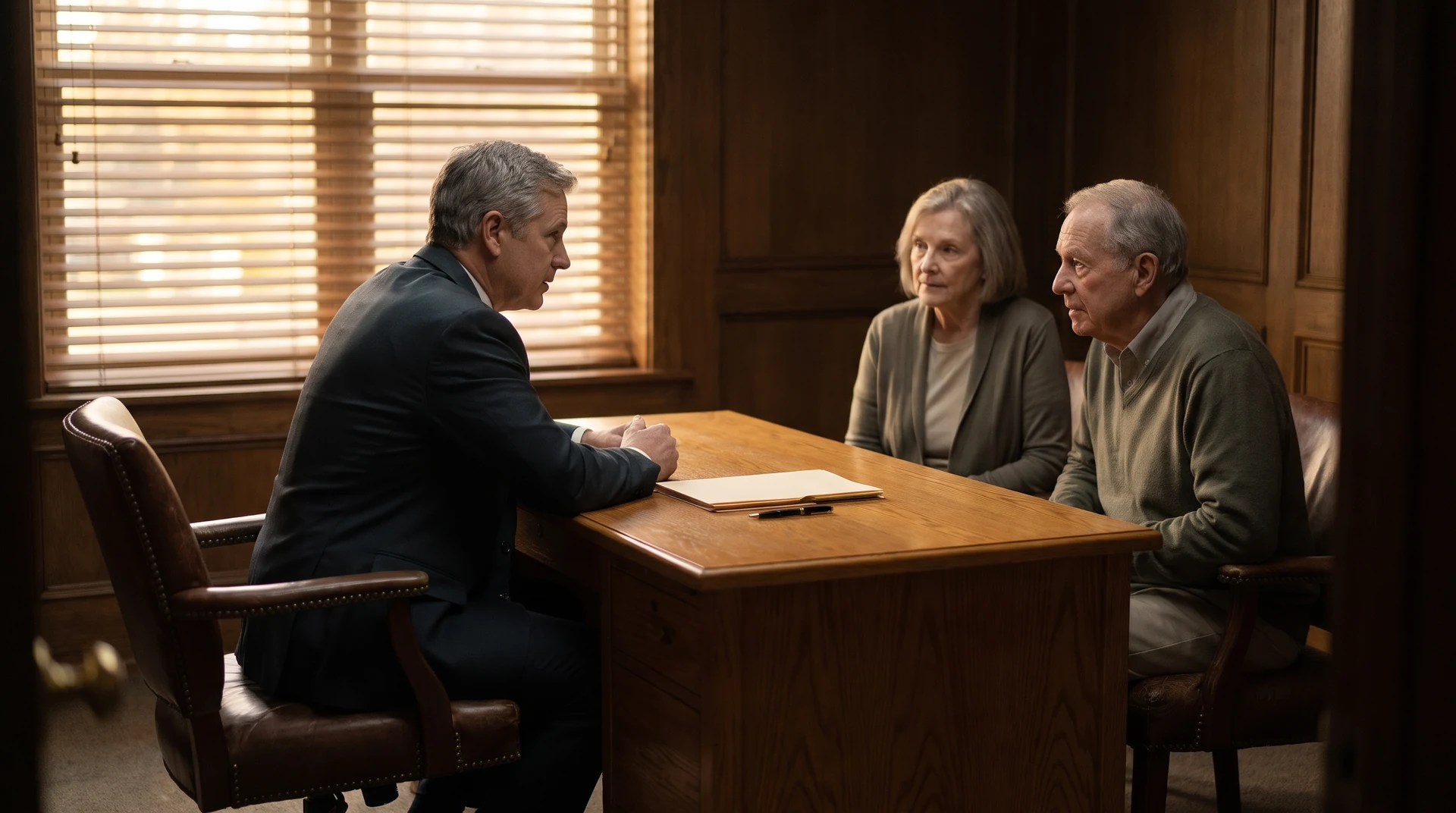
An objection to a mutual will differs substantially from an objection to an ordinary will, mainly because of Section 8A of the Succession Law, which governs how such a will may be changed and revoked. This guide sets out the grounds, deadlines and procedure specific to spouses who made a joint will.
Objection to a Mutual Will can be filed mainly at two stages: after the death of the first spouse, when an application for a probate order is filed, and after the death of both spouses. Alongside the general grounds that apply to any will, such as lack of capacity or undue influence, there is a unique ground: changing or revoking the will contrary to the rules the legislature set in Section 8A of the Succession Law, 5725-1965.
A mutual will is common among many couples in Israel, precisely because it offers a simple answer to what they want: that the property will pass to the other spouse, and afterwards to their joint heirs. But this simplicity is misleading. Once a dispute arises, the procedure for objecting to a mutual will is more complex than objecting to an ordinary will, because it examines not only the original will but also every change made to it afterwards, and sometimes also the relationship between the spouses over the years after it was made. This guide sets out the grounds, deadlines, procedure and evidence required in the case of a mutual will, including illustrative examples and questions that come up in practice in consultation meetings.
What Is a Mutual Will and Why Objecting to It Is More Complex
A mutual will is a will that spouses make in favor of each other, or that each of them makes with reference to the other's will. Its central feature is mutual reliance: each spouse makes their will on the assumption that the other spouse has made a parallel will, and that both are acting out of a shared agreement on the fate of the property.
The Difference Between a Mutual Will and an Ordinary Will
In an ordinary will, every testator is free to change or revoke their will at any time, without conditions. In a mutual will, the mutual reliance creates restrictions on change and revocation that do not exist in an ordinary will. One spouse cannot simply "change their mind" without this affecting the rights of the other party, and sometimes also the rights of heirs who relied on the existing situation.
Two Possible Structures: One Document or Two Separate Documents
Section 8A(a) of the Succession Law recognizes two forms of mutual will: a mutual will made in a single document shared by both spouses, or two separate wills, each made with reference to the other spouse's will. This difference does not affect the existence of mutual reliance, but it may affect how it is proven in court. When there is one document, it is clear on its face that this is a mutual arrangement. When there are two separate documents, it is sometimes necessary to examine the wording of both wills together to determine whether mutuality exists at all in the legal sense, or whether these are two independent wills that are merely similar in content. This question itself can be grounds for a dispute: a party seeking to remove the restrictions of Section 8A may argue that there was no genuine mutual intention, only similar wills made in parallel.
Section 8A of the Succession Law in Brief
Section 8A of the Succession Law was added to explicitly regulate the issue of mutual wills and to protect the surviving spouse and the shared agreement that formed the basis of the will when it was made. The section sets separate rules for changing and revoking the will, depending on whether both spouses are still alive or the first spouse has already died.
For this reason, an examination of Objection to a Will: When, Until When and How It Works regarding a mutual will cannot be limited to reviewing the original will alone. It must also examine the joint drafting process and every change or revocation made afterwards, including whether that change met the conditions set by law.
Objection to a Mutual Will: When It Can Be Filed at Each Stage
Timing is at the very heart of understanding a mutual will. The stage the spouses are at determines not only whether a formal objection can be filed, but also which grounds are relevant and which restrictions apply to changing the will.
While Both Spouses Are Alive
As long as both spouses are alive, there is no probate order, and therefore no objection proceedings in the formal sense. An objection cannot be filed against a will that has not yet taken effect. However, if there is a suspicion of a defect in the making of the will, such as doubtful legal capacity or drafting under undue influence, it is possible to act on other levels, such as applying to the Family Court on related matters, or documenting the relevant evidence early in case the issue arises in the future.
After the Death of the First Spouse
When one spouse dies, whoever wishes to do so files an application for a Probate Order: The Complete Guide, usually for the same mutual will made by both spouses. This opens the regular objection window, which also applies to ordinary wills: anyone with an interest in the estate can file an objection with the Registrar of Inheritance Affairs within the period set in the regulations.
At this stage, it is important to remember that an objection may relate not only to the original will but also to whatever version has now been submitted for probate. If the surviving spouse changed the will before the application was filed, the version submitted may already be the amended will, and not the one made jointly.
After the Death of Both Spouses
When the second spouse also dies, an additional question arises that does not exist with an ordinary will: whether the will submitted for probate is indeed the will that remained in force, in light of any change or revocation made between the two dates of death. The surviving spouse may have changed their part of the will, renounced their rights, or made an entirely new will after the first spouse died.
In the last two stages, a thorough examination must cover who filed the application for the probate order, which version of the will is involved, and what actually happened between the two dates of death. Without this information, an objection may be based on a will that is not the most relevant one for the case.
Application for an Extension of Time
As a rule, the period for filing an objection is fixed in advance in the regulations, but in exceptional cases, such as late discovery of an amended will or of a change that was not known, a reasoned application for an extension of time may be filed. Such an application is examined according to the specific circumstances, and it should not be assumed in advance that it will be granted. Where there is any doubt about a deadline, it is advisable to act without delay and not to wait for all the details to be fully clarified before first contacting a lawyer.
The Special Grounds for Objecting to a Mutual Will
Some of the grounds for objection are the same for any will, but a mutual will adds another layer, derived entirely from mutual reliance and from Section 8A of the Succession Law.
Defects in Capacity and in Understanding the Mutual Nature of the Will
General grounds such as lack of legal capacity, forgery, undue influence and failure to meet the formal requirements of the Succession Law also apply to a mutual will, exactly as they do to any other will. More information on Grounds for Objecting to a Will in general is also relevant here as a basis.
But a mutual will raises an additional ground: a claim that the testators did not understand they were making a mutual will, meaning they did not know they were creating a dependency between the two wills. If one of the parties thought they could change their will freely, without knowing they were bound by the mutual arrangement, a question may arise as to their true intention at the time the will was made.
Undue Influence Between the Spouses
A claim of undue influence in a mutual will usually arises when a third party, such as a child from a previous marriage or a relative, claims that the surviving spouse exerted undue influence on the original testator, already at the stage of making the joint will. This claim is examined under the ordinary rules that apply to any will, but it takes on special relevance when the spouses lived in close proximity and mutual dependence.
Failure to Comply with the Rules for Change or Revocation Under Section 8A
This is the central ground and the one most unique to a mutual will. Section 8A(b) of the Succession Law sets separate rules for changing or revoking the will, depending on the stage at which the change is made:
- As long as both spouses are alive, a change or revocation requires notice to the other spouse as a condition for validity.
- After the death of the first spouse, the surviving spouse is subject to stricter restrictions, which usually require them to renounce what they are entitled to receive from the deceased spouse's estate as a condition for changing their part of the will.
When an heir or a person with an interest in the estate claims that the surviving spouse changed the will without meeting these conditions, for example without giving the required notice or without returning what they received from the estate, this is an independent ground for objection. In such a case, the claim does not focus on a defect in the original will, but on a defect in the way it was changed or revoked.
Defects in Form and Forgery
As with any will, a mutual will must meet the formal requirements set by the Succession Law, according to the type of will (handwritten, before witnesses, before an authority). A claim of forgery, or a claim that the will was not signed as required, will be examined in exactly the same way as with an ordinary will. It is important to emphasize: any final determination on capacity, undue influence or compliance with the requirements of the law will be examined and decided by the court after evidence is presented, and no outcome should be assumed in advance.
The Role of Geriatric and Psychiatric Expert Opinions in Proving the Claims
When the ground concerns legal capacity at the time the will was made or at the time of a later change, a professional geriatric, neurological or psychiatric opinion may be a decisive element in proving the claim. Such an opinion is needed to address the testator's cognitive state at the relevant date, and not at a later date when their condition had already deteriorated, if it did. In practice, the party claiming a defect in capacity must locate medical records, testimony from professionals who treated the testator around the date the will was made, and sometimes also close witnesses who can describe their daily condition during that period. The greater the gap between the date the will was made and the date evidence is gathered, the harder it is to build an accurate picture, hence the importance of contacting a lawyer early, as soon as a suspicion arises.
Who May File an Objection to a Mutual Will and What the Initial Procedure Is
The right to object is reserved for anyone with an interest in the estate: an heir by law, a person named in an earlier will, or any other party who may be harmed by probate of the mutual will in the version submitted. In the context of a mutual will, this circle widens somewhat, since a third party harmed by a change made contrary to Section 8A may also have standing to object.
The question of standing is particularly relevant to those not mentioned in the will at all, such as a child left out of the distribution, or a potential heir by law who would have benefited had the will not existed. Even someone who is not called as a direct heir, but has a right that may be harmed if the will is probated as written, may meet the threshold conditions for filing an objection, subject to an examination of their individual entitlement.
The objection is filed with the The Registrar of Inheritance Affairs within whose jurisdiction the application for the probate order was filed, together with reasons and an affidavit supporting the alleged grounds.
In most cases involving a mutual will, given the factual complexity (the date the will was made, the date of any later change, and the relationship between the spouses), the Registrar transfers the case to the Family Court. This happens because the Registrar of Inheritance Affairs is authorized to handle simple objections, but any substantive factual dispute requires hearing evidence, which takes place in court.
At this stage, it is sometimes also necessary to examine additional documents, such as the wording of the original will alongside any later version, notices of revocation or change delivered between the spouses, and documentation of the circumstances of their life together that may support or weaken the claims.
Changing and Revoking a Mutual Will: How It Affects the Objection
Understanding the rules for change and revocation is usually the key to any objection to a mutual will, since in practice the central ground concerns the original will less, and the way it was changed more.
Revocation While Both Spouses Are Alive
As long as both spouses are alive, a change or revocation of the mutual will by one of them requires notice to the other spouse as a condition for the change to be valid. Without such notice, the change may be considered invalid, even if it was made lawfully in terms of the form of the will itself. This stage is relatively simple, since both parties can still respond, and there is not yet a situation of one-sided reliance.
Revocation After the Death of One Spouse
After the death of the first spouse, the surviving spouse can change or revoke their part of the mutual will, but only if the conditions of Section 8A(b) of the Succession Law are met. In most cases this requires renouncing what they are entitled to receive from the deceased spouse's estate, since otherwise the spouse would benefit from the estate and also change their part contrary to the original shared agreement.
When an heir or another interested party claims that the surviving spouse changed the will without meeting these conditions, this is, as noted, the central ground for objection in many cases: not a defect in the original will, but a defect in the way it was changed after the death of the first spouse.
It is also important to check whether there is an amended mutual will that was deposited with the Registrar of Inheritance Affairs at some stage, in order to identify the most relevant version for the proceedings. Depositing a will is not mandatory, but when it exists, it provides strong evidence of the will's content and the date it was made.
Illustration: Two Possible Scenarios
To understand the practical effect of Section 8A, it can be illustrated with two general scenarios, for illustration only and not as a description of a real case. In the first scenario, spouses sign a mutual will in a single document stating that all the property will pass to the surviving spouse, and afterwards to their two joint children in equal shares. The first spouse dies, and the second spouse, a few years later, signs a new will favoring one child at the expense of the other, without first renouncing the property received from the first estate. In such a case, the child who was harmed may claim that the change was made contrary to the conditions of Section 8A(b), and is therefore invalid.
In the second scenario, both spouses are still alive, and one of them decides to change their part of the mutual will, for example after a separation or another crisis in the relationship. If they notify the other spouse in writing and meet the ordinary formal requirements, the change may be valid under Section 8A, even if the other spouse is unhappy about it. The difference between the two scenarios shows why the death of the first spouse is a legal turning point, and not only an emotional matter.
The Stages of Filing an Objection to a Mutual Will in Practice
The practical procedure for filing an objection to a mutual will is similar in its general structure to objecting to an ordinary will, but the factual examination that accompanies it is more thorough. The procedure usually includes the following stages:
- Locating all versions of the will: checking whether a will was deposited with the Registrar of Inheritance Affairs, alongside any other version held by the heirs or family members.
- Establishing the timeline: an exact sequence of the date the mutual will was made, the date of the first spouse's death, and every change made afterwards, as a basic condition for building the claims.
- Gathering evidence: medical records, close witnesses, written messages between the spouses, and any relevant professional opinion.
- Filing the objection with the Registrar of Inheritance Affairs: In writing, with reasons and an affidavit, within the period set in the regulations.
- Transfer to the Family Court: In the event of a factual dispute, including hearing witnesses and expert opinions.
- Judicial decision: the court decides whether the will, or the change made to it, is valid, after examining all the evidence.
Filing with the Registrar of Inheritance Affairs
After an application for a probate order for a mutual will is filed, a notice is published that allows any interested party to file an objection within the period set in the regulations. More details on How Long You Have to File an Objection to a Will are relevant here too, since the general principle regarding deadlines also applies to a mutual will.
The objection is filed in writing, stating the alleged grounds precisely, and is accompanied by an affidavit and relevant documents, such as the wording of the will, notices of change if any, or testimony about the circumstances in which it was made.
Transfer to the Family Court
When there is a factual dispute, for example about the cognitive state of one of the testators when the will was made, or about whether notice was given as required by Section 8A, the case is transferred to the Family Court to hear evidence. In court, testimony is heard, and sometimes professional opinions are also presented, before a decision is made on the validity of the will or of the change made to it.
This procedure can take time, depending on the complexity of the case and the number of relevant witnesses. In any event, the final decision on capacity, undue influence or compliance with the conditions of the law rests with the court alone, after hearing the evidence from both sides. During the proceedings there may be pre-trial hearings, a stage of mutual document disclosure, cross-examination of witnesses and experts, and written summations before judgment is given. In some cases, the parties choose to reach a settlement during the proceedings, but any such settlement must be given the force of a judgment or be submitted for approval to the court hearing the case.
Comparison Table: Ordinary Will vs. Mutual Will in the Context of an Objection
The following table summarizes the main differences between objecting to an ordinary will and objecting to a mutual will, without repeating everything reviewed above.
| Aspect | Ordinary will | Mutual will | Note |
|---|---|---|---|
| Basic grounds | Capacity, influence, forgery, defect in form | Exactly the same grounds | Identical in both types |
| Unique ground | Does not exist | Breach of the Section 8A rules | Exists only in a mutual will |
| Change after the first party's death | Completely free | Restricted and conditional | Main source of disputes |
| Who may object | Another heir at law | Also anyone harmed by a later amendment | A wider circle in a mutual will |
| Number of possible will versions | Usually one relevant version | There may be several successive versions | Requires locating all versions |
| Medical opinions | Relevant only if a defect in capacity is claimed | May be relevant to two points in time: drafting and amendment | Greater evidentiary complexity in a mutual will |
Common mistakes that undermine an objection to a mutual will
Several mistakes recur in cases involving an objection to a mutual will, and may significantly harm the prospects of the claim:
- Focusing only on the general grounds: Addressing only capacity or undue influence, without examining the history of amendments and revocations made to the mutual will itself after it was drafted.
- Overlooking the date of death of the first spouse: This date determines which restrictions on amendment apply from that moment onward, and without establishing it precisely, it is difficult to build a precise claim.
- Filing an objection without locating all versions of the will: Including versions deposited with the Registrar of Inheritance, which may leave an updated, relevant version out of the picture.
- Waiting beyond the set deadline: On the mistaken assumption that the objection can be "completed" later, whereas missing the deadline may close off the option to object.
- Ignoring documentation of the amendment: Gathering evidence only about the original will, without collecting documentation on the circumstances in which the later amendment was made, which is usually the heart of the dispute.
- Collecting medical evidence late: Requesting records or opinions many months after the proceeding has opened, when some of the relevant witnesses or caregivers are no longer available or their memory has faded.
What to prepare before meeting a lawyer about an objection to a mutual will
A first consultation is more effective when you come with organized material. Before the meeting, it is advisable to gather:
- All known versions of the will, including any amendment or revocation made after the death of the first spouse, if there is one.
- Documentation of the dates of death of both spouses, and of the stage at which an application for a probate order was filed.
- Details on the relationships between the spouses and the heirs, which may be relevant to examining claims of undue influence.
- Any medical document or testimony that may indicate the cognitive state of either testator at the time of drafting or at the time of the later amendment.
- Contact details of possible witnesses, such as caregivers, neighbors or relatives, who were close to the testators during the relevant periods.
- Any bank document or land registry record that may reflect a transfer of assets made around the date of the alleged amendment.
At the meeting, the lawyer handling the case, Shay Zohar himself or Adv. Eliyahu Richter, will review the will documents and the circumstances of the specific case before giving an assessment of the objection's prospects. In this context, questions about the cost of objecting to a will often come up at the first meeting, and are answered once the scope of work required in the individual case becomes clear.
Frequently asked questions
Can a mutual will be revoked without the other spouse's consent?
As long as both spouses are alive, I can change or revoke my part of the mutual will, but there is usually a duty to notify the other spouse as a condition for the change to be valid, under Section 8A of the Succession Law.
What is the difference between objecting to a mutual will and objecting to an ordinary will?
The general grounds, capacity, undue influence and formal defects, are the same. The key difference is an additional ground that exists only in a mutual will: a claim that the surviving spouse amended or revoked it without meeting the conditions of Section 8A of the Succession Law.
Can an objection to a mutual will be filed before both spouses have died?
A formal objection to a probate order is relevant only after the death of the first spouse, because that is when the proceeding opens before the Registrar of Inheritance. As long as both spouses are alive, there is no objection proceeding in this sense.
How long do you have to file an objection to a mutual will?
The time period for filing an objection is set in the regulations, and begins to run from the date of publication of the notice of the application for the probate order. The exact deadline for each case will be examined according to its circumstances.
What happens if the surviving spouse changed the mutual will without giving the required notice?
A change made without meeting the conditions of Section 8A of the Succession Law may be considered invalid and may serve as grounds for an objection or for an application to annul the amended will, subject to the court's decision.
Which body handles an objection to a mutual will?
The objection is first filed with the Registrar of Inheritance Affairs. When there is a complex factual dispute, such as those that arise with mutual wills, the case is transferred to the Family Court for hearing and decision.
Can a child from a previous marriage object to the mutual will of their parent and the parent's spouse?
As a rule, anyone with an interest in the estate, including a child from a previous marriage who may be harmed by the distribution set in the mutual will or by an amendment made to it, may have standing to file an objection. Their individual standing is examined according to the circumstances, and in particular according to their potential entitlement had the will not existed.
What happens if the mutual will was never deposited with the Registrar of Inheritance?
Depositing a will with the Registrar of Inheritance is not mandatory under the Succession Law, and the absence of a deposit does not affect the validity of the will. However, without a deposit, proving the existence of the will, its exact wording and the date it was drafted relies solely on testimony and private copies, which may make things harder for both sides: both for the party seeking to probate the will and for the party objecting to it.
Should mediation be attempted before filing an objection to a mutual will?
The law does not require mediation as a precondition for filing an objection with the Registrar of Inheritance. However, in proceedings transferred to the Family Court, the parties are sometimes invited to consider mediation or a parallel dispute resolution process alongside the legal proceeding, depending on the circumstances and the parties' positions.
Can an objection be filed if the mutual will has already been probated in the past?
If a final probate order has already been granted, the regular period for objection has passed, and as a rule a regular objection cannot be filed. Only in exceptional cases, such as the late discovery of material facts that were not previously known, may another route for challenging the order be available, subject to an individual review of the circumstances and the relevant deadlines.
The information in this article is general only, does not constitute legal advice for a specific case, and is not a substitute for an individual review of the circumstances of the case. For a precise review of your rights regarding an objection to a mutual will, it is advisable to schedule a personal meeting.
The office of Adv. Shay Zohar, Family and Inheritance Law in Ramat Gan represents private clients and companies in wills and estate cases, including cases involving mutual wills. The office is managed by Adv. Shay Zohar, together with Adv. Eliyahu Richter, and both handle cases in family and inheritance law. Every case begins with a personal meeting at the office in Ramat Gan, where the documents and circumstances relevant to the specific case are reviewed. To schedule a meeting, you can contact us via WhatsApp or by phone at 054-668-0699.
The office of Adv. Shay Zohar represents clients in will contests, in defending a will against a contest, and in divorce proceedings, at a meeting in the office in Ramat Gan.
The information in this article is general and does not constitute legal advice or a substitute for a meeting with a lawyer. Every case is examined according to its own facts.